

EV Charging Guide
How to charge your EV. Fast and easy with E.ON Drive.
Everything you need to know about public EV charging — from charging speeds and connectors to payment options and finding stations across Europe.
Discover Public EV charging with E.ON Drive
E.ON Drive offers a variety of charging solutions to fit your lifestyle, whether at home, on the go, or at your destination.
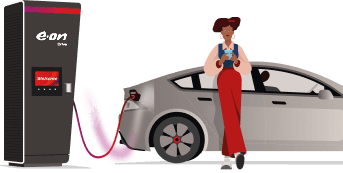
Destination Charging
Charge while you shop, dine, or enjoy a day out. Find chargers at retail parks, hotels, and leisure venues.

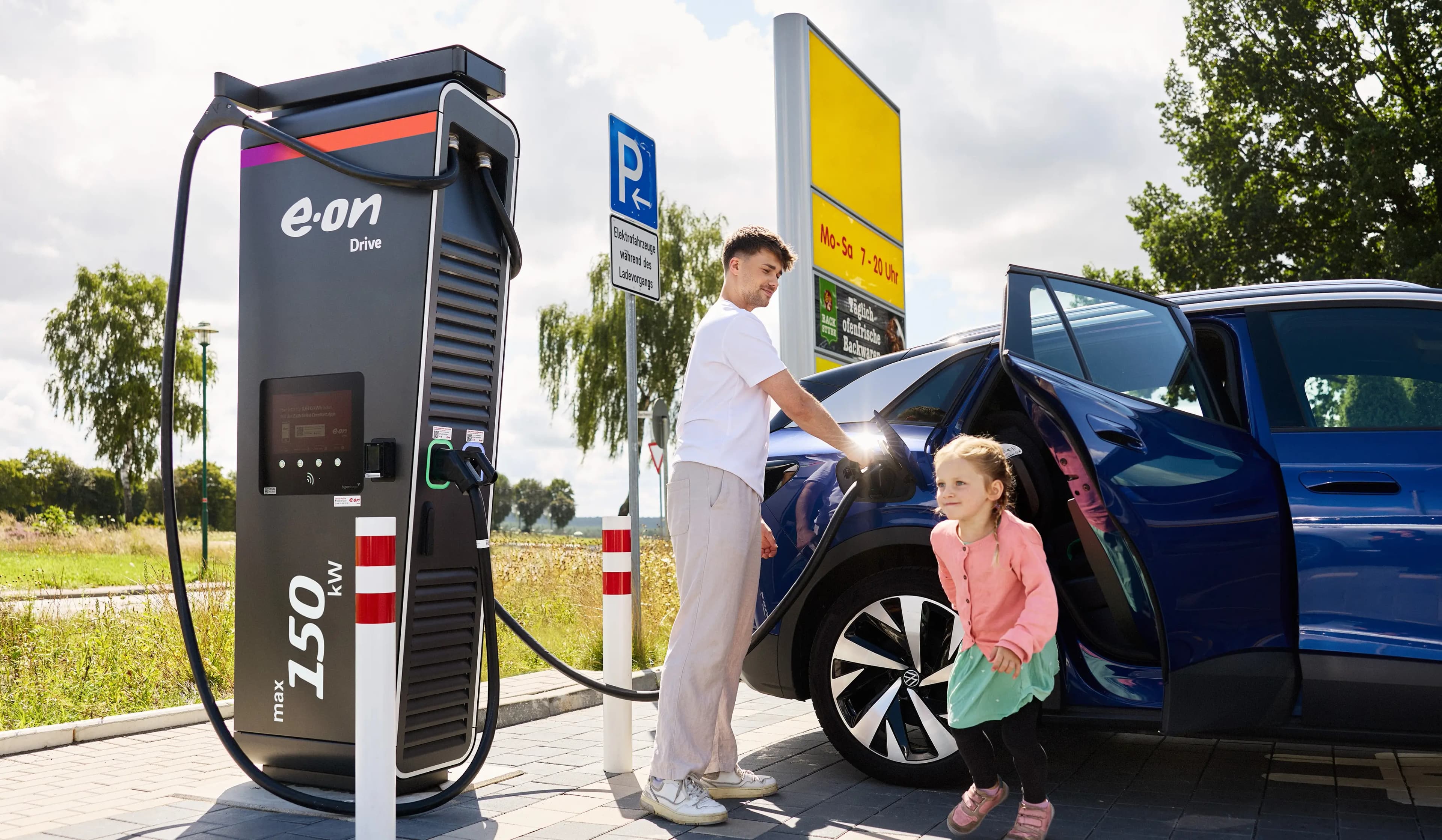
On Route Charging
Fast charging when you need it most. Located at service stations and key routes across the country.

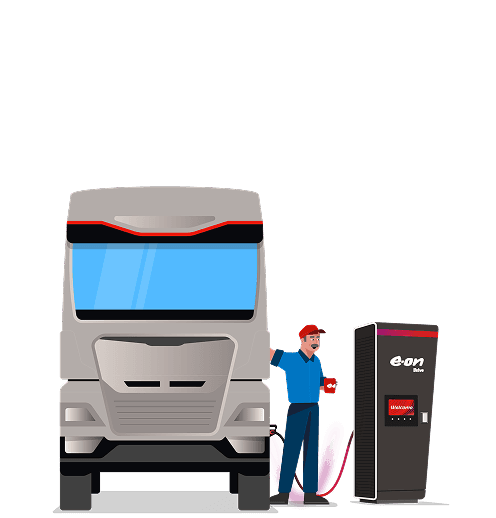
eTruck charging
Ultra-rapid charging for your longest journeys. Get back on the road in minutes, not hours.
Discover Public EV charging with E.ON Drive
E.ON Drive offers a variety of charging solutions to fit your lifestyle, whether at home, on the go, or at your destination.
Destination Charging
Charge while you shop, dine, or enjoy a day out. Find chargers at retail parks, hotels, and leisure venues.
On Route Charging
Fast charging when you need it most. Located at service stations and key routes across the country.
eTruck charging
Ultra-rapid charging for your longest journeys. Get back on the road in minutes, not hours.
How to Charge an Electric Car at a Public Charging Station
Find your next E.ON Drive charging point
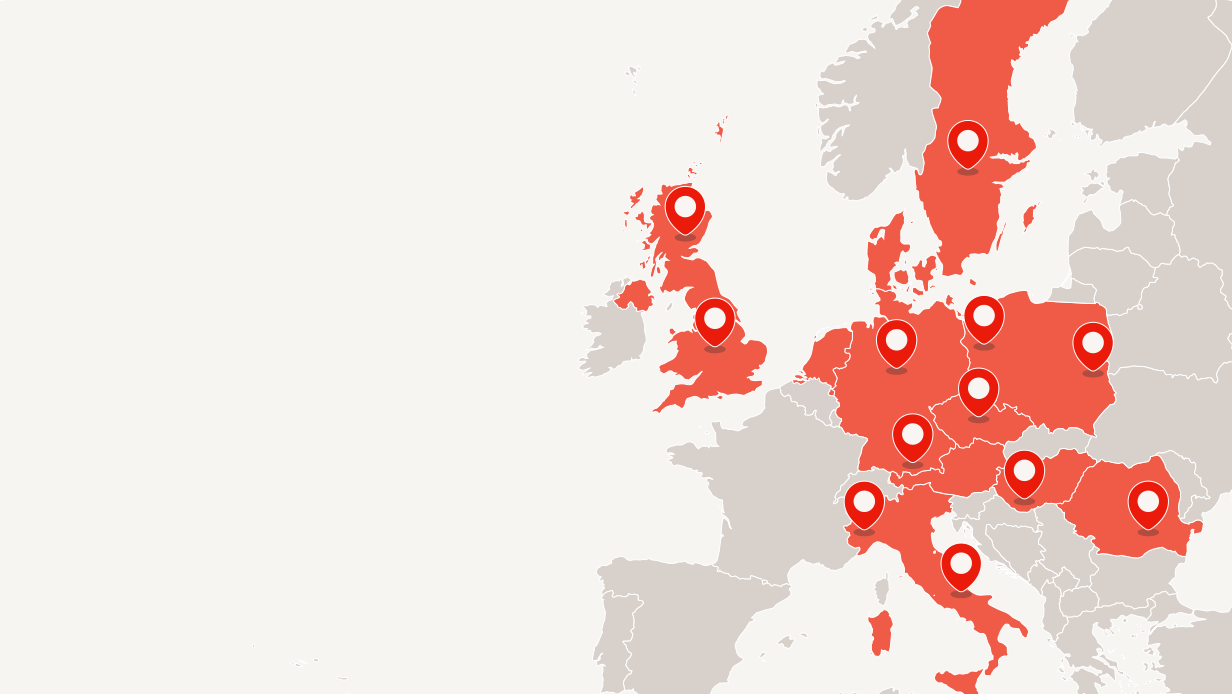
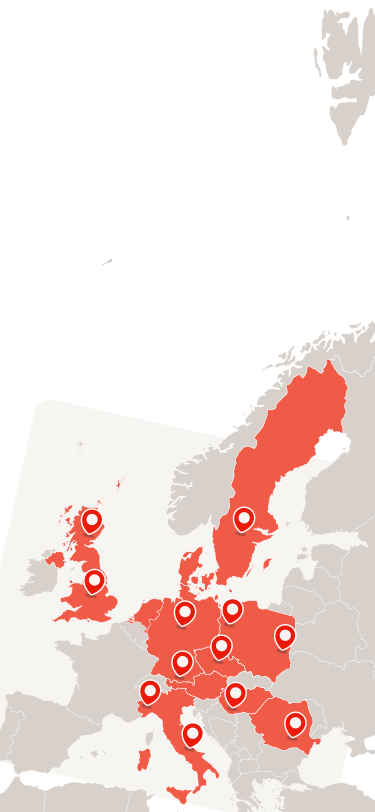
With thousands of public charging points across Germany, Denmark, Sweden, Czechia and other European markets, E.ON Drive Infrastructure supports electric mobility wherever your journey takes you.
Find your next E.ON Drive charging point
With thousands of public charging points across Germany, Denmark, Sweden, Czechia and other European markets, E.ON Drive Infrastructure supports electric mobility wherever your journey takes you.
EV Charging Speeds Explained
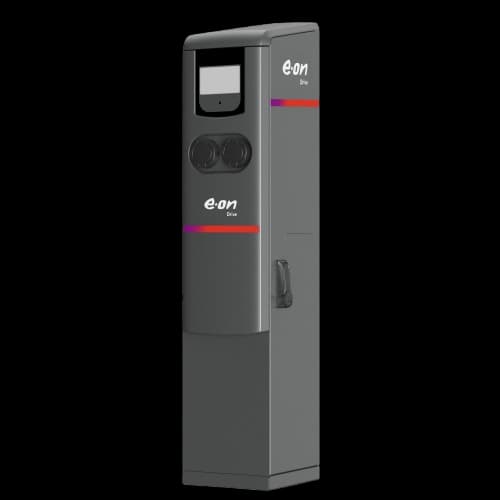
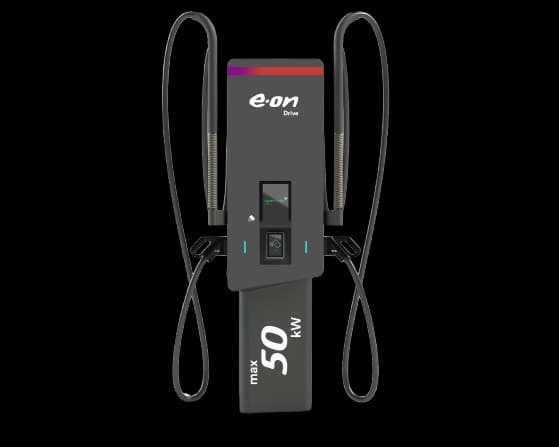
Charging speeds are measured in kilowatts (kW). The higher the kW rating, the faster your vehicle can charge — depending on your car’s capability.
Standard
AC Chargers
Fast
DC Chargers
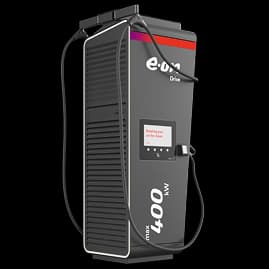
Ultra Rapid
HPC Chargers

How Long Does It Take to Charge an Electric Car?
Your charging time
100km ≈
6 min
The calculated charging time is an estimate only. Use this result as a general guideline.
How Long Does It Take to Charge an Electric Car?
Your charging time
100km ≈
6 min
The calculated charging time is an estimate only. Use this result as a general guideline.
EV Charging Connectors in Europe
CHAdeMO
Primary use: DC fast charging (legacy standard)
Typical power range: Up to 50–100 kW
CHAdeMO is an earlier DC fast charging standard originally developed in Japan. It is primarily found on older EV models and at selected public charging stations.
While still supported at some locations, CHAdeMO is gradually being phased out in Europe in favour of CCS, which has become the dominant DC charging standard.
Drivers of older Nissan, Mitsubishi, or early-generation EV models should verify connector availability in the station finder before starting their journey.
Type 2 (AC)
Primary use: AC destination and neighbourhood charging
Typical power range: 11 kW to 22 kW
Type 2 is the European standard connector for AC charging. It is widely used for public charging in city centres, residential areas, workplaces, and destination locations such as supermarkets or hotels.
AC charging delivers power directly to the vehicle’s onboard charger, which converts AC electricity into DC to store in the battery. Charging speeds depend on the vehicle’s onboard charger capacity.
Type 2 connectors are standard across Europe and are compatible with nearly all electric passenger vehicles.
CCS (Combined Charging System)
Primary use: DC rapid and ultra-rapid charging
Typical power range: 50 kW to 400 kW
CCS (Combined Charging System) is the European standard for DC fast charging. It combines a Type 2 AC connector with two additional DC power pins, enabling significantly higher charging speeds.
CCS is used at rapid and high-power charging (HPC) stations along motorways, major travel corridors, and high-frequency destinations. It enables short charging stops and substantial range extension within minutes, depending on vehicle capability and battery state.
Most modern electric vehicles sold in Europe are equipped with a CCS port. For long-distance travel and motorway charging, CCS is the dominant and future-proof standard.
How to Pay at an EV Charging Station
Contactless Payment
Simply tap your contactless card or device to start charging. No app or account required.
RFID Charging Card
Use your E.ON Drive RFID card for seamless access to our charging network. We also accept most charging cards of other providers.
QR Scan to Pay
Scan the QR code on the charger to pay via our mobile-optimised web portal.
Online Payment via App
Pay easily with your app — whether it's the E.ON Drive app or one of our partner apps. Select the charging point, and start charging instantly.
Plug & Charge
Plug & Charge is available on all Alpitronic DC chargers across the majority of our network. It enables seamless charging with automatic authentication and payment via ISO 15118 - just plug in. Autocharge is not supported yet.
Who receives your payment?
Pay directly at the charger and you pay E.ON Drive Infrastructure. Use a charge card or app, Essent's or another provider's, and you pay that provider at the price in your contract. Either way, we operate the charger.
Why is there a pre-authorisation fee?
Before charging starts, a temporary amount is reserved on your card to confirm that sufficient funds. The amount varies by country and charger type and is shown on the charger’s screen before you start charging. In the Netherlands, this amount is €40. It is automatically replaced by the actual charging cost after your session ends. Depending on your bank, the temporary hold may remain visible for a few days.
EV Charger Light Indicators Explained
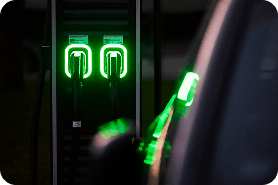
Green
Charging point available and ready to use.
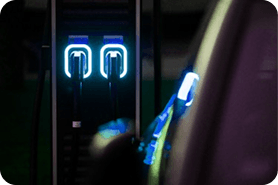
Blue
Charging point in use – vehicle is charging.
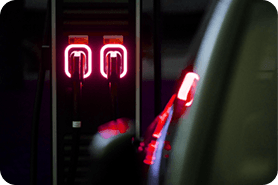
Red
Charging point unavailable or temporarily out of service.
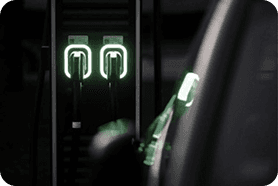
White
Charging point in system status, for example during a restart or after a software update. The charger is temporarily not available.

Accessible Public EV Charging for Everyone
Electric mobility should be accessible to everyone, which is why our public charging stations are designed with intuitive user interfaces, optimized parking layouts and clear on-site guidance. We continuously enhance ease of access, visibility and safety to ensure a convenient and barrier-free charging experience in everyday environments. If you need assistance during your charging session, our support team is available to help at any time.
EV Charging FAQs
How many Essent charging stations are there in the Netherlands, and where can I find them?
In the Netherlands we have more than 70 locations with more than 350 charge points. Most are at fuel stations along busy traffic routes. While you charge, you can use the shop and facilities of the fuel station. You can find all locations on our map and in the common charging apps.
How fast can I charge at Essent charging stations in the Netherlands?
Our fast chargers deliver up to 300 kW. Most modern electric vehicles can charge from 20% to 80% in around 20 minutes, depending on the vehicle model and battery conditions. At our Mega Charging Hubs, charging speeds range from 150 kW to 300 kW, while our other locations offer charging speeds between 50 kW and 150 kW.
Will the chargers be rebranded in the Essent design?
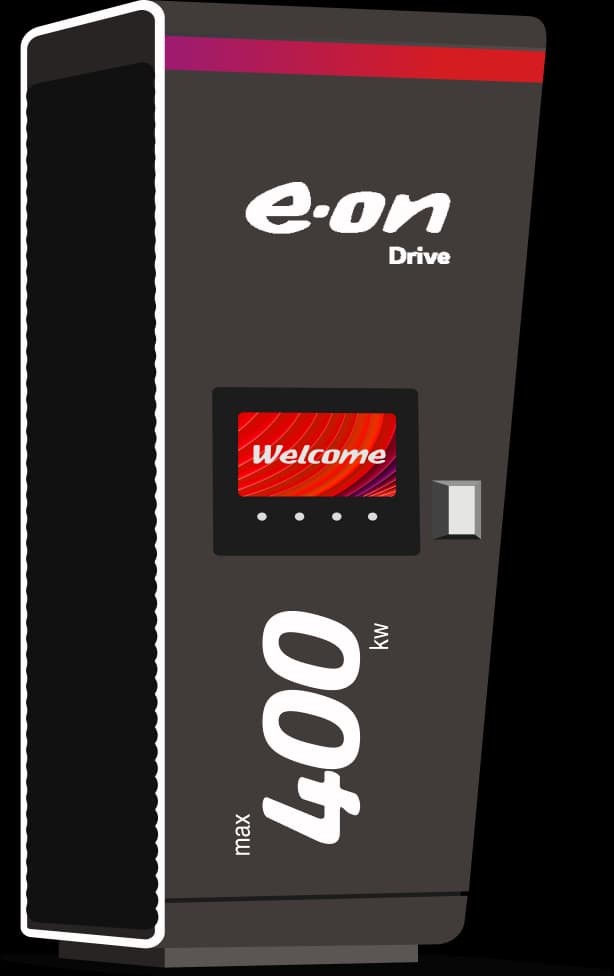
Yes. All public fast chargers for passenger cars in the Netherlands will be branded in the Essent design and will feature “Operated by E.ON Drive” on every charger. Chargers that we have acquired from other operators will be rebranded, while newly installed chargers will be deployed directly in the Essent design. You can continue charging as usual throughout this process.
Which app can I use to charge in the Netherlands?
In the Netherlands we recommend the Essent app. With the Essent app or charge card you charge at our charging stations and benefit from the introductory discount. You do not need an app: you can also charge with another charge card or app, or pay directly by credit or debit card.
I was a BP Pulse customer. What changes for me?
For now, nothing changes. BP Pulse remains an active roaming partner, so your BP Pulse card or app keeps working at these charging stations. You are also very welcome to try the Essent charge card.

Need Help with EV Charging?
Our support team is here to assist you with charging, payments and station availability across our network.
Prefer to talk? Call our hotline:+31 88 400 6010